In this lesson Jed takes us through the incredible AC/DC classic You Shook Me All Night Long. This song is full of great chord riffs but leaves you nowhere to hide! Is this a perfect song? Maybe...
- Home
- Pathways
- Coaching
- Free Lessons

guitar club
by your guitar academy
Get started for free
Back to blog

Free guitar lesson
You Shook Me All Night Long
AC/DC
9 Jan 2026
Lesson by
Jed Cutler
Write-up by
Ollie Fleming
“
Ollie Fleming
“
Song overview
Whenever you learn a song it's important and useful to know the key. In this one we're in G. This lets us know our 'home' sound and can help us choose a scale to solo with. Before we dive in to learning the individual parts let's quickly look at the structure of this song. There are three main parts, which are the intro, verse and chorus. Here's how they make up the song:
Intro / Verse / Prechorus / Chorus / Verse / Prechorus / Chorus / Presolo / Solo / Chorus / Outro
As you can see there is a lot of repetition here, which is great! That means you can use the same section multiple times, even though you only learn it once. The 'joining' parts of the song (the prechorus for example) may take a little extra time to nail, but Jed is here to help!
Intro
The song starts with a hooky intro that sets the stage for the rest of the tune, with a melodic chordal idea that really pulls us towards what will be the root note. We start off with a modified Dsus4 A shape chord that uses the open D string to give a nice drone note under the melody. We then run down that melody before sliding down to an open D5 chord. Here are the two chords we're arpeggiating in the intro
Once we're down to the open D5 there's a little blues phrase that rolls around before we go back up to the Dsus4 shape. Here are those notes on the fretboard:
From there we go back to the top and play the intro again, but this time we don't do the blues phrase - just allow the D5 to ring out.
Verse
The verse of this song is all about rhythm and groove! There are a lot of pushed chords here, which means we're playing the chord on the offbeat before a strong beat, for example the '+' of 4. The chords we need are G5, C5 and D5. You may have noticed that these are all power chords, but we're not using the familiar shape here, we're using these open shapes:
Verse Rhythm
The rhythm is what really drives this song along, so make sure you spend a bit of time to work on nailing when to strum, and also when to mute the notes.
“
A good tip for getting this rhythm is to listen while counting along, and take note of which chords land on the beat and which chords land on the offbeat.
Ollie Fleming
“
Here is the chord chart for the verse - for simplicity we've written out the chart without the pushes and the 5's, but you need to get them for it to sound right!
Jed demonstrates this rhythm perfectly in the video, so pay careful attention and try to note which chords are pushed and which aren't. To mute the chord just lay your picking hand on the strings to stop them moving. It might be easier said than done, but it'll come with practice! Then, just before the chorus we play a Dsus4 back to a D. Here are those shapes:
Chorus
That leads us right into the chorus which really changes the dynamics away from the tight, choppy sound of the verse. Now we've got lush open chords that are allowed to ring out. It's a brilliant piece of songwriting that really makes the song feel like it's gone up a notch! The chords are G, Cadd9, G/B and D5. These chord names might sound complicated but in reality it's more about holding the high strings in place and moving the low notes. Here are the shapes for your reference:
And we link them up with that lovely diatonic run on the A string that Jed demonstrates in the video.
The rest
Thank you to Jed for breaking down the main parts of the song for us. There is of course the excellent guitar solo that needs a separate video to cover, but underneath the solo we simply play a modified version of the chorus. And to lead into the solo we As Jed mentions in the video, try playing along with the song and really listen to the dynamics in the track. Just because it's simple doesn't mean it's easy so take your time and have fun!
More Angus!
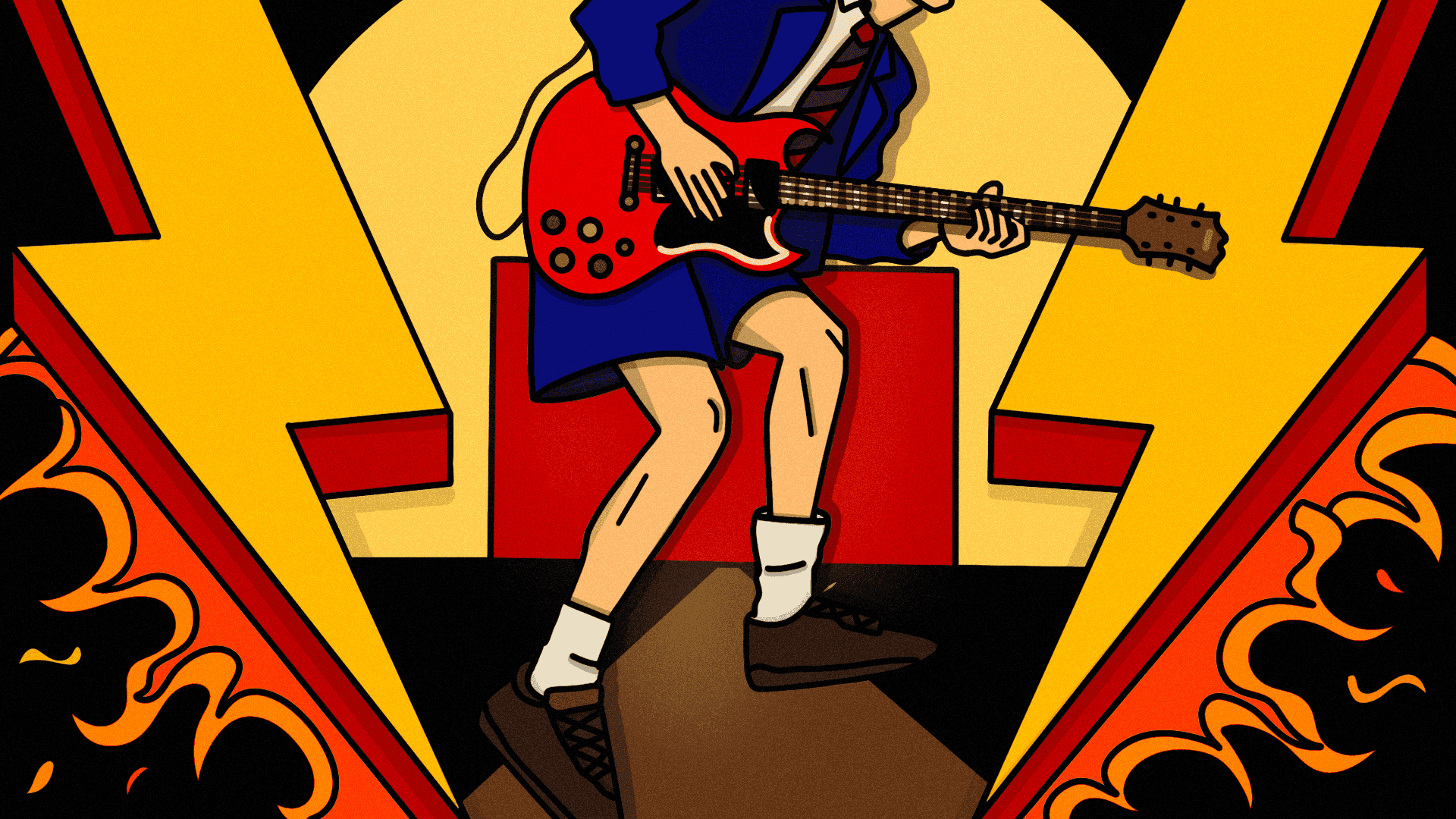
If you want to learn more about the AC/DC approach to guitar please check out our Angus Young player study here.
If you enjoyed this lesson, consider creating a free account! Get your free guitarist's toolbox and try our full courses 🎸🔥